Is your ex tracking you? What every woman needs to know

Source: iStock
"You have to assume that you're being surveilled in some way, shape, or form."
That's not a line from a thriller. It's what Anthony Macklin – ex-detective and founder of Rampart Consulting – told me when we sat down to talk about what he sees when relationships break down.
I'll be honest. Parts of this conversation stopped me in my tracks. But I also found it deeply useful. Because the women who are most at risk from surveillance and stalking are sometimes the last to know it's happening – not because they're naïve, but because the behaviour escalates gradually, and because they've often been conditioned to doubt themselves.
This article is the practical version of that conversation. What surveillance during separation actually looks like. The signs it's happening. What Australian law says about it. And what you can do – right now – to protect yourself.
Key takeaways
Surveillance during separation is more common than many people expect – and it doesn't always involve expensive or obvious technology
Spy apps can hide on your phone and transfer to a new device during a smart switch – if you suspect surveillance, get a brand-new phone and set it up from scratch
Kids' belongings – toys, backpacks, tablets – can be used to carry listening devices between homes
In most Australian states, installing surveillance devices or accessing someone's data without consent is a criminal offence
Do not access your ex's phone, accounts, or data in return – it can be used against you in family court
If you're planning to leave, set up safe infrastructure first: a new email, a separate bank account, a safe phone
Keep a chronology of suspicious incidents – date, time, what happened, and why it matters
If you're in immediate danger, call the police or 000 – don't wait
Why this happens
Anthony's first point was one I really want you to hear: you don't have to have been in an obviously controlling relationship for this to become an issue.
"The person you lived with is not always the person they're going to be when you break up," he said. "What I have seen is people that were seemingly in a happy relationship but just went separate ways — and the other side of the relationship didn't much seem to care until the separation came to bear.”
Separation can trigger behaviour that wasn't there before. Control, jealousy, the need to know what you're doing and who you're doing it with – these things can emerge at the point of leaving, even if the relationship felt relatively normal before that.
This isn't meant to frighten you. It's meant to help you be prepared rather than caught off guard.
What surveillance actually looks like
Most people picture surveillance as something out of a spy film – high-tech, expensive, covert. Anthony says that's not usually how it works.
"You have to open your mind to the fact that it doesn't always have to be high tech and it doesn't always have to be particularly covert."Here's what he and his team actually find.
The dash cam
Anthony described a case where a woman knew her ex was tracking her – but a sweep of the car found no tracking device. What they did find was a dash cam with GPS location and remote audio access. Her ex was listening to conversations happening in her car.
If you've got a dash cam, check who has access to the app. If the car was shared, your ex may still be connected.
Built-in vehicle tracking
Higher-end cars – BMWs, Mercedes, and others – often have built-in tracking apps. If your ex ever had access to your vehicle, they may have the app on their phone and can see where the car is at any time.
Spy apps on your phone
This is the one that got my attention. There are apps – sold openly, often marketed as parenting tools – that are designed to track someone's location, read their messages, access their emails, and record audio and video around the phone. Without the phone owner knowing.
"Even though it's an app, you won't see it," Anthony said. "So you go through and have a look. It's not there."
And when you upgrade your phone by doing a smart switch – transferring everything from one phone to the next – the app moves with you. You're on a new device, but they still have access.
"As long as they're maintaining that subscription, it'll keep going."
The most unsettling version: some of these apps can record audio and video even when you're not actively using the phone.
The Trojan horse – kids' belongings
If you have children and you're co-parenting, Anthony flags what he calls the Trojan horse effect. Devices hidden in teddy bears. Thumb drives with sixty hours of voice-activated recording tucked into a backpack. Kids' tablets that have been accessed.
"Because that's going between houses, effectively they're able to download that and listen to it at a later stage."
The simple stuff
And then there's the burner phone. Anthony described a case – someone had bought a cheap phone, plugged it into a wall charger, and hidden it under a nest of tables in their ex's lounge room. The phone was set to answer silently after two rings. Every time the ex drove past and saw the lights on, they'd call the phone and listen in to what was being said.
"The next time he was conversing with her, he'd let her know that he knew this or that. She didn't know whether to trust her flatmate. She didn't know what was going on."
That's ofen the purpose of surveillance during separation. Not just information – destabilisation. Keeping you off balance.
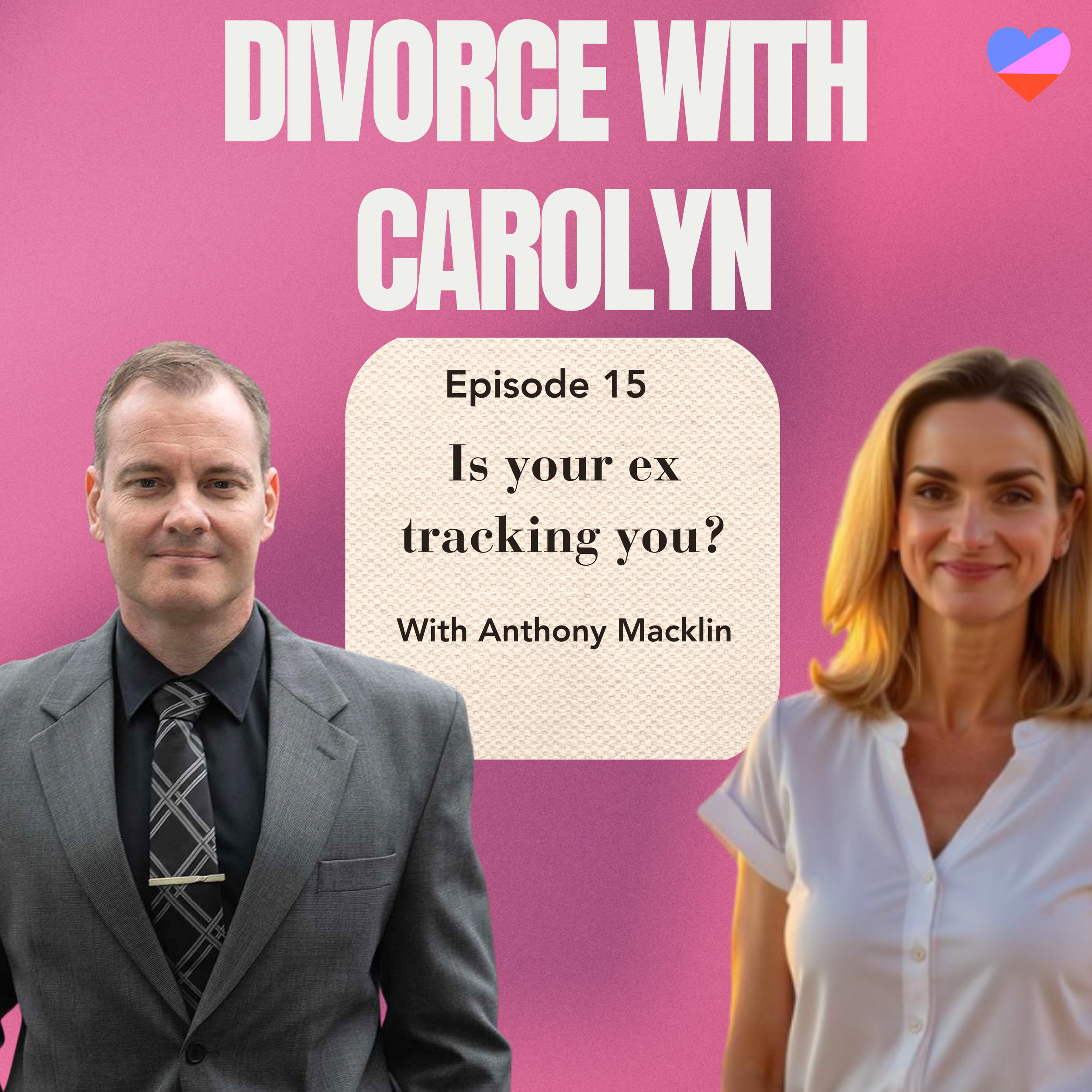
You can listen to Anthony Macklin on episode 15 of Divorce With Carolyn.
Signs it might be happening
If you're wondering whether you're being tracked, Anthony says the most common tell is simple: your ex seems to know things they shouldn't.
But there are other signs too.
Your lawyer receives a letter from their side that seems to be in response to a conversation you had privately, before your lawyer even sent anything
The same person – your ex, a mutual friend, someone you don't know – keeps appearing in the same places as you, even when you're not following a predictable routine
Your ex shows up at places you weren't planning to go, at times that feel too specific to be coincidence
"That is definitely an alarm bell for you that you're being tracked," Anthony said.
What Australian law says
Surveillance during separation isn't just harmful – in most circumstances, it's illegal.
Anthony specialises in New South Wales, so his legal references are specific to NSW law. Laws may vary by state and territory, so check with a lawyer if you're in a different state or country.
Under the NSW Surveillance Devices Act, it is an offence to record a private conversation if you are not a party to it. Even if you are a party to the conversation, covertly recording it – without the other person's knowledge or consent – is generally illegal unless you can establish a specific legal defence.
This means: if your ex has put a listening device in your home, hacked your phone, or installed a spy app, they are committing a criminal offence.
The behaviour also falls under domestic violence legislation, including coercive and controlling behaviour. At minimum, it is covered by stalking and intimidation legislation.
Under the Crimes Act 1900 (NSW), accessing someone's data – their phone records, emails, files – without permission is a criminal offence with a significant prison sentence attached.
What NOT to do
I want to pause here, because I know in some circumstances, we’ve all been tempted to check an ex's phone or accounts in return.
Don't.
"If you access someone's data – and data has a very broad meaning – you've accessed data illegally. And that has a prison sentence attached to it, and quite a hefty one. If you change anything, that virtually doubles that. And remember, everything you do usually leaves a digital signature on the device."
The last thing you need when you may be the victim of family violence is to look like the criminal in a family court proceeding. Get help from professionals who know what they're doing legally.

Check your devices for any unusual activity or apps that may be used to track or record you. Source: Unsplash
What you CAN do
1. Check your devices and apps now
If you're in or thinking about leaving a relationship with controlling elements:
Delete Life 360 and any family tracking apps from your phone
If you suspect a spy app, do not do a smart switch to a new device – get a brand-new phone and set it up from scratch
Check your iCloud, Apple ID, and Google account – if your ex knows your password (and they probably can guess it), change everything
Check who has access to your dash cam app and your car's tracking app
2. Don't let devices travel between homes with your children
This is expensive to set up, but Anthony recommends separate devices at each home. When kids come back from your ex's place, check their soft toys – give them a pat down.
If you can't afford two sets of everything, at minimum be mindful of what's going between houses and try to minimise it.
3. Keep a chronology
If you believe you're being tracked or stalked, start a record.
"A spreadsheet – date, time, here's what happened, and a so what. Why is this relevant?"
If keeping a written record feels unsafe, send a message to a trusted friend immediately after each incident. Give it a thumbs up and keep their copy. Then delete yours. You now have a witness with a timestamped record.
"It's not just that you made it up on a Friday night after you've had a couple of drinks and you're unhappy with your ex. It's contemporaneous evidence."
4. Wrap your phone in foil if you need to
The Faraday box method: if you believe your phone is compromised and you need it to stop transmitting, wrap it tightly in several layers of aluminium foil. No signal in or out. It's not a long-term solution, but it stops tracking in the short term.
Here’s a tutorial on doing it properly.
5. Before you leave – set up safe infrastructure
If you're planning to leave:
Set up a new email account through a trusted friend's device, not your own
Get a separate phone if you can
Open a bank account in your name only
Put a small amount of money somewhere safe – not to take assets unfairly, but to have something to fall back on if access to joint funds is cut off
Step back from social media completely during the early weeks of separation
"The big hump to get over is trying to create a brand new you in a new space," Anthony said. "But that's where you need a trusted support network."
About going to the police
Anthony was honest about the limitations here, and I want to be honest with you too.
Walking into a police station and saying "I'm being listened to" without evidence is, in his experience, unlikely to get the response you need. Police are stretched, and they haven't necessarily been trained to identify surveillance devices or understand the specific legislation that applies.
Anthony’s advice: find the evidence first, then take it to the police – ideally with someone who can help you articulate what offence has been committed and under what act.
Frontline domestic violence services are also a strong first port of call. They can help you safety-plan, connect you to the right support, and point you toward resources even if your situation doesn't fit a specific criteria.
Who to call
Anthony's business, Rampart Consulting, works with people in exactly this situation – ex-police, ex-detectives who know how to find surveillance devices, gather evidence, and help you build a case. They also work alongside family lawyers on asset investigations and child safety matters.
If you're in immediate danger, call 000.
1800RESPECT: 1800 737 732 (national, 24/7)
The bigger picture
Anthony left me with this.
"Think about how your potentially soon-to-be ex partner has responded to either former ex partners or to someone in their life that they truly hate. You're going to become that new person to them."
That's a confronting thought. But it's also useful. Because if you know what someone is capable of when they're angry or hurt, you can plan for it.
"Plan for the worst and hope for the best" – that was Anthony's final note. Not to scare you. To give you the chance to get ahead of it.
You deserve to feel safe in your own home. You deserve to know that what you say in your lounge room stays there.
And if that's not where you are right now – help is available. You don't have to figure this out alone.
Disclaimer
The information in this article is general in nature and does not constitute legal advice. Laws around surveillance vary by state and territory. If you believe you are in danger, contact the police or a frontline domestic violence service immediately. In an emergency, call 000.
Frequently asked questions
How do I know if my ex is tracking my phone? The most common sign is that your ex seems to know things they shouldn't – details from private conversations, places you've been, decisions you've made before telling anyone. Other signs include your ex showing up at unexpected locations, or your lawyer receiving correspondence that appears to respond to private conversations. If you suspect a spy app, don't do a smart switch to a new phone – get a brand-new device and set it up from scratch.
Is it illegal for my ex to track me in Australia? In most circumstances, yes. Recording private conversations without consent, installing surveillance devices, and accessing someone's data without permission are criminal offences under Australian law. The specific legislation varies by state and territory. If you believe this is happening, speak with a lawyer or a frontline domestic violence service.
Can spy apps really hide on my phone? Yes. Some apps – often marketed as parenting or family safety tools – are designed to be invisible to the phone owner. You won't find them by looking through your apps. They can track location, read messages, access emails, and in some cases record audio and video. They can also transfer to a new phone during a smart switch.
What should I do if I think my house has a hidden listening device? Don't confront your ex or let on that you suspect anything. Contact a professional – security risk management specialists can sweep your home and car for devices. Start keeping a record of suspicious incidents.
If you're in immediate danger, call 000.
What's the safest way to leave a relationship where surveillance is a concern? Set up new, separate infrastructure before you leave – a new email account created on a trusted friend's device, a new phone set up from scratch, a bank account in your own name only. Step back from social media. Put a small amount of money aside if you can. Anthony Macklin's full advice on this is in episode 15 of the Divorce With Carolyn podcast.
Can I check my ex's phone or accounts to find evidence of what they're doing? No. Accessing someone's data without their permission is a criminal offence in Australia, and anything you do on their device leaves a digital trace. It can also be used against you in family court proceedings. Get professional help to gather evidence legally.
Women's Divorce Academy is a membership community for women navigating separation and divorce – expert guidance, practical resources, and a community of women who understand. Join here.