Alone is not the same as lonely after divorce

I never felt more lonely than I did in the last year or two of my marriage.
Not when I was by myself. When I was in the house – with my husband, surrounded by the life we'd built together.
There is a particular kind of loneliness that comes from being invisible to the person who is supposed to know you best. Most women who have been through a difficult relationship know exactly what I mean. And yet, when that relationship ends, the thing they fear most is being alone.
That fear makes sense. We've been told our whole lives that alone equals lonely – that being single is a problem to fix and that the gap between relationships is a holding pattern, not a destination. But I want to challenge that, because I think it's keeping a lot of women in the wrong relationships and rushing out of the right season of their lives.
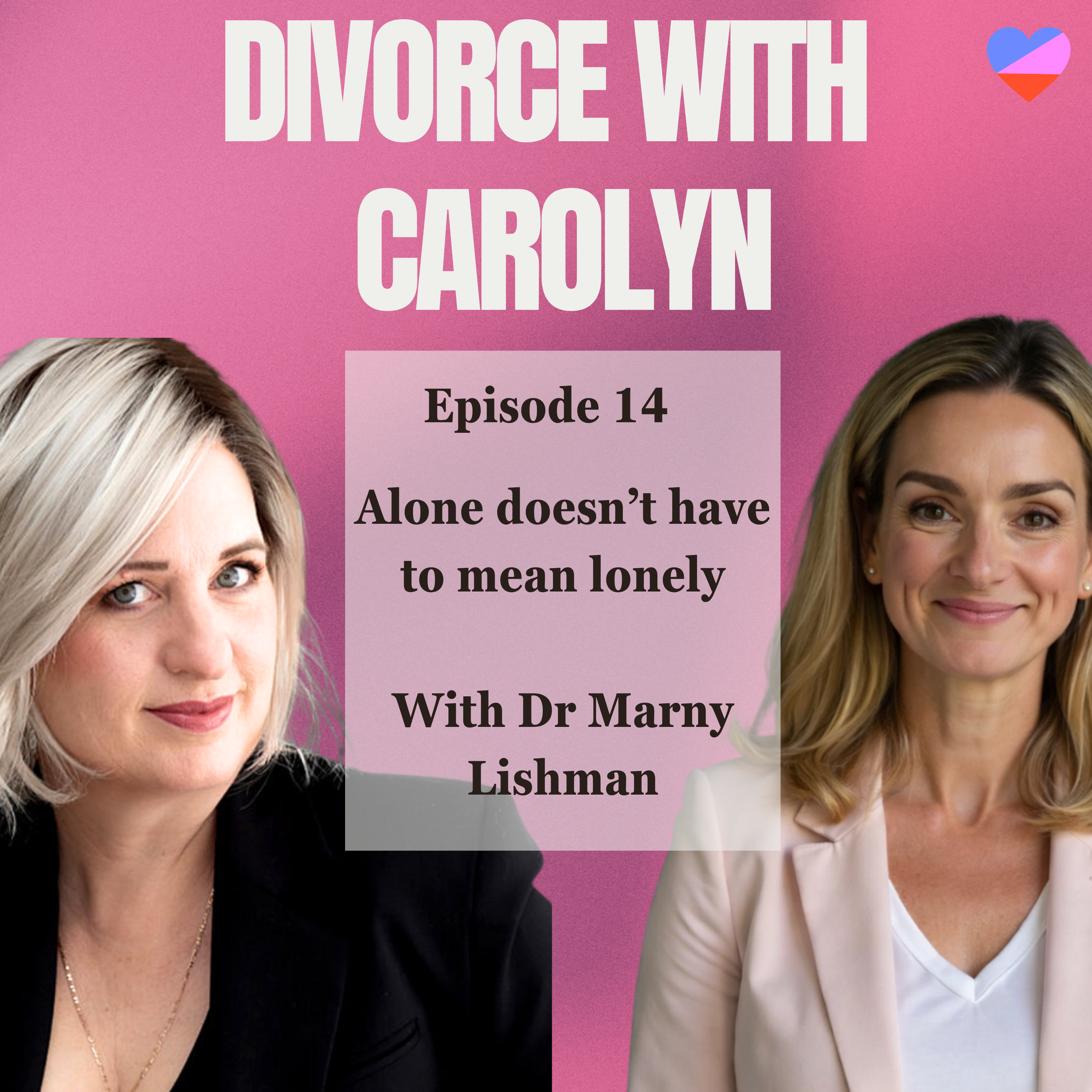
This week on Divorce With Carolyn, I spoke with psychologist and author Dr Marny Lishman about her book Only You: The Unexpected Gift of Being Alone. What followed was one of the most useful conversations I've had on this podcast – practical, honest, and full of the kind of insights that make you want to take notes.
"Alone doesn't necessarily mean lonely. And you can certainly be lonely even when you're not alone." – Dr Marny Lishman
Are you lonely, or are you alone? The difference matters
Loneliness and aloneness are not the same thing – and confusing the two is one of the most costly mistakes women make after separation.
Loneliness is an emotional state. It's the feeling of disconnection, of not being seen or understood. And as many women discover, you can feel profoundly lonely inside a long-term relationship – particularly one where the emotional intimacy eroded long before the relationship officially ended.
Aloneness is simply the state of being by yourself. It is neutral, until we attach meaning to it.
The problem, as Dr Marny points out, is that society has been attaching meaning for a long time. Being single is treated as a gap – a problem to solve, a status to escape. And so when a relationship ends, the cultural pressure to couple up again starts almost immediately.
"Society has placed these expectations on us – that little moment of time where we're not coupled up, that it's something to fix." – Dr Marny Lishman
What gets lost in that pressure is the possibility that being alone might not need fixing at all.
Why does divorce feel so disorienting – even after you've made the decision?
One of the most useful things Dr Marny said in our conversation was about timing. Most people assume that grief begins when a relationship officially ends – when someone moves out, when papers are signed, when the announcement is made. But that's rarely how it works.
"There's almost like an ending way before the actual physical end. There's a shifting in the mind for one person or both people in the relationship. And so that loss and that grief is happening while you're still in the relationship." – Dr Marny Lishman
This is why so many women arrive at separation already exhausted. The grief has been running in the background for months – sometimes years – while they were still managing the household, co-parenting, keeping up appearances, and trying to make something work that had already quietly ended.
If you feel like you should be further along by now – like you've been grieving too long, or not long enough – give yourself some grace. Your emotional timeline is more complicated than a date on a calendar. You've probably been grieving far longer than anyone has given you credit for.
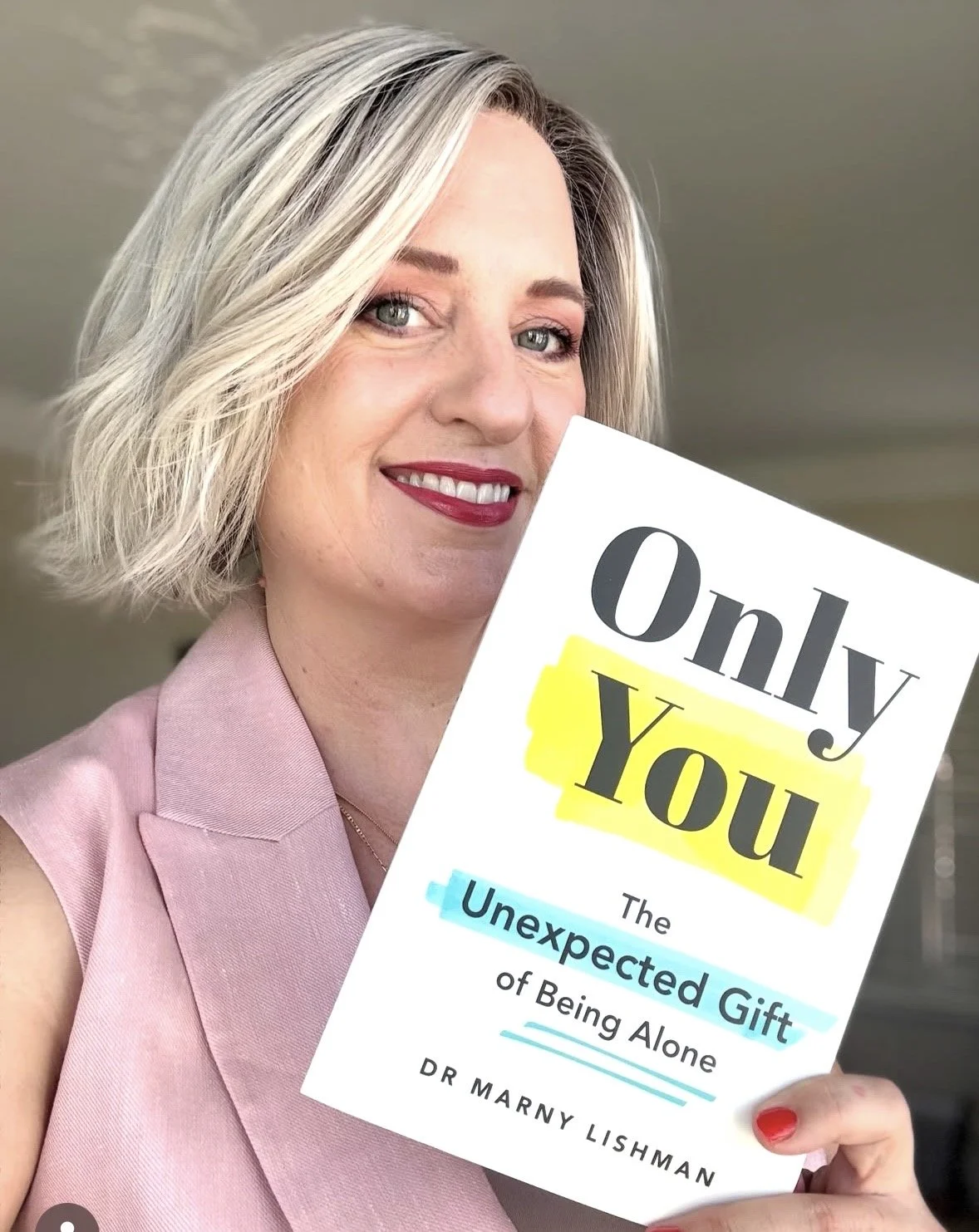
This week’s podcast guest Dr Marny Lishman is the author of Only You: The Unexpected Gift of Being Alone.
Why do women rush into new relationships after divorce?
The short answer: because being alone feels unbearable, and no one has ever shown us that it doesn't have to be.
Dr Marny is clear that there is no formula for how long to wait before dating again. Some people find someone new quickly and it works. But she is equally clear that many women rush for the wrong reasons – to escape discomfort, to meet social expectations, or simply because they don't know what else to do with themselves.
"People rush from one relationship and just go looking straight away – without that period of time in between where you have to unravel all ofresearch the stuff and unpack all of the baggage. And people rush through that way too quickly." – Dr Marny Lishman
The problem with rushing isn't that finding someone new is wrong. The problem is what gets buried in the process. The unresolved emotions don't disappear when you start dating again. They surface later – often in the new relationship, as the same patterns, the same fears, the same walls.
A longitudinal study published in Stress and Health found that reflective cognitive processing following the end of a relationship was associated with post-traumatic growth — while brooding predicted higher distress.
Research published in Emerging Adulthood found that the period after a relationship ends gives people time to reflect on what worked and what didn't, leading to self-growth and better adjustment in approaching future relationships.
The work of the messy middle isn't just navel-gazing. It's important preparation.
What is the messy middle – and why shouldn't you skip it?
Dr Marny dedicates a significant section of Only You to what she calls the period of heartbreak to healing. It's uncomfortable. It's disorienting. And most people try to sprint through it.
"It's almost like you have to feel uncomfortable to become comfortable. Just have a lot of self-compassion for what you're going through and practice as much self-care as you can." – Dr Marny Lishman
The messy middle is the time when you're not yet who you're becoming, but you're no longer who you were. When the noise of the relationship – the conflict, the negotiation, the constant management of someone else's expectations – starts to settle.
And in that settling, something unexpected can happen.
"Get rid of those negative emotions and then that alone time will get your brain to start communicating with you about what you actually need in your life. There's whispers. And you realise that whisper is actually coming from you." – Dr Marny Lishman
For many women – particularly those who have been in relationships since they were teenagers, or who spent years putting everyone else's needs first – this is the first time they've been in a position to hear themselves. To know what they actually want, without someone else's preferences shaping the answer.
"You might find some gold in there that's been hidden away for such a long time." – Dr Marny Lishman
The shape-shifting you didn't notice
One of the most honest moments in our conversation came when we talked about how people change inside long relationships – and how gradual and invisible that change is while it's happening.
I used the word "contorted" when talking about how I altered myself to fit the role of wife in my marriage. Dr Marny picked it up immediately.
"Not until you're alone and you spend some time alone and you get through that uncomfortable phase do you even realise that you've been in that kind of shape-shifting – and sometimes for decades." – Dr Marny Lishman
After my own marriage ended, I slowly started to feel like the person I was before – someone I'd assumed I'd simply "changed from." But I hadn't changed. I'd been contorted. And when the relationship was over, she came back.
More mouthy. More opinionated. Entirely herself.
She stays. We like her!
This is the unexpected gift Dr Marny is talking about. Not the absence of a relationship. The return of a self.
How do you find yourself again after divorce?
The practical question underneath all of this is: what do you actually do during the alone time? Here is what Dr Marny recommends, from our conversation and her book.
Write
Journaling is one of the most consistently useful tools for processing the emotions of separation. Dr Marny describes it as cathartic – and I'd agree, even though I have a complicated relationship with it. Every time I sit down to journal I feel irritated. Every time I get up I feel better.
The reason it works: writing surfaces what's beneath the circular thoughts. You have to write the first layer before you can get to the next one.
Read other people's real stories
During her own difficult period, Dr Marny read autobiographies – real accounts of how people navigated hard times and came out the other side. Not the filtered, polished version of success. The actual story.
"It gave me hope that I would get out the other side." – Dr Marny Lishman
Autobiographies, memoirs, and honest first-person accounts remind you that the messy middle is not permanent – and that the people who got through it are not extraordinary. They're just further down the road.
Move your body and get outside
Dr Marny walks her dog through the city most days. I went bushwalking. Whatever it is for you – get outside, move, and do it without an agenda or a destination. The physical act of moving through space does something to the emotional stuck-ness that nothing else quite replicates.
Do the hard practical things
On the day my ex-husband moved out, the first thing I did was fix the toilet seat. It had been broken for years. I found a YouTube video, followed along, and fixed it.
I felt genuinely good about that toilet seat.
Dr Marny talks about this – the value of doing the things you've never done before, the things that feel too hard, the things you assumed you couldn't manage. Every time you get through one, you build evidence that you are more capable than you thought.
"You're stronger than you think you are. And you feel so good when you have achieved those things." – Dr Marny Lishman
This isn't just feel-good advice. Building new capabilities during a challenging period creates real neurological change – new neural pathways that make future challenge feel more manageable. You are, in the most literal sense, rewiring yourself.
Try something completely new
Not just things you used to love – some of those won't fit anymore. I played netball and did athletics when I was young. My ankles are not interested in revisiting that. I've taken up crochet instead. My kids find this hilarious. I don't care.
How do you know what you like if you never create the space to find out?
The new standard: "Is he better than my solitude?"
The moment from our conversation that I keep coming back to: Dr Marny's filter for whether she'd give up her solitude for a new relationship.
One question.
Is he better than my solitude?
This is not cynicism. This is what self-knowledge sounds like.
When you have done the work of being alone – of sitting in the discomfort, of finding out who you actually are, of building a life that genuinely suits you – the bar for what's worth disrupting shifts completely.
The question stops being will someone want me? It becomes does this person make my life better?
"If you've got a really full life, if you're tackling your life in a really holistic way and being really proactive – you know, that person needs to be a bonus." – Dr Marny Lishman
That is the work the messy middle makes possible. Not the absence of wanting love. The presence of a self who knows her own worth.
You are not alone in being alone
I asked Dr Marny what she'd say to a woman who is dreading this chapter – or who is already in it and struggling.
"Know that you're not alone in being alone. There are so many of us who've come out the other side and are really so much better off than we were before. Don't be scared of it. You're not alone even when you are alone. There's lots of super cool stuff on the other side." – Dr Marny Lishman
I know she’s right. I've experienced this myself and I work with women every day who are discovering the same thing.
The alone time is not the gap. It's part of your story. And for a lot of women – more than anyone talks about – it turns out to be one of the best chapters.
▶ Listen to the full episode: Only You: The Unexpected Gift of Being Alone with Dr Marny Lishman is available now on Divorce With Carolyn.
▶ Free resource: The Self Trust Roadmap is a free guide to rebuilding trust in yourself after separation.
▶ Ready to stop doing this alone? Women's Divorce Academy is a membership community with expert guidance, practical resources, and a community of women who understand exactly where you are.
About this post
This article was written by Carolyn Tate, founder of Women's Divorce Academy, following her conversation with Dr Marny Lishman on the Divorce With Carolyn podcast. All quotes from Dr Marny Lishman are taken directly from that conversation. Only You: The Unexpected Gift of Being Alone by Dr Marny Lishman is available now.
This article contains general information only and is not intended as a substitute for professional psychological support. If you are experiencing mental health concerns, please reach out to Beyond Blue (1300 22 4636) or Relationships Australia (1300 364 277).