Divorce and Money: How to Feel Calm, Clear and in Control Again

For many women, money is the part of divorce that feels the most frightening — and the least discussed openly.
When I was going through my own separation, it wasn’t the legal paperwork that kept me awake at night. It was the numbers. Rent. School shoes. Electricity. Groceries. I remember thinking, What if there isn’t enough? Even once I started to recover financially, it took much longer for my nervous system to settle.
That’s why I wanted to sit down with Naomi Holmes.
Naomi is a money coach and the host of the Her Money Matters podcast. Before starting her own practice, she spent years in financial services, working as a financial adviser and in leadership roles. Over time, she began noticing a pattern she couldn’t ignore.
“I’ve always been around women and money,” she told me. “And what stood out for me was that women are often left out of the money conversation.”
Sometimes, she explained, that exclusion is subtle. “She chooses to exclude herself. She either doesn’t have the confidence, she doesn’t care, she doesn’t want to know — someone else does it for her.” Other times, it’s relational. “Her partner can exclude her depending on the relationship dynamics.” And sometimes, it’s systemic. “Even financial advisers can exclude her. The conversation’s directed to the male.”
By the time divorce arrives, that pattern has consequences.
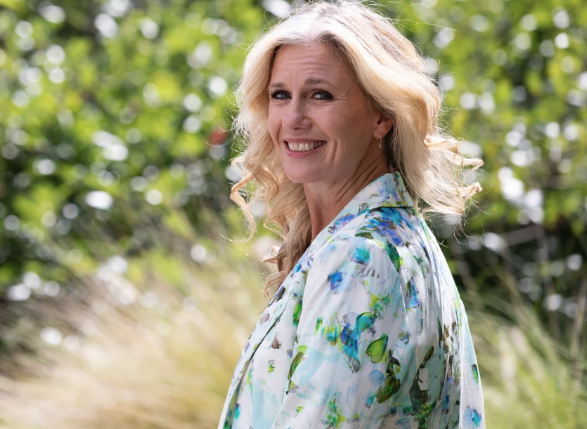
Naomi Holmes is the host of the Her Money Matters podcast
Why women feel disconnected from their finances after separation
One of the most common experiences I see inside Women’s Divorce Academy is capable, intelligent women suddenly feeling completely unmoored when it comes to money after separation. They’ve run households, managed careers, supported children — but they don’t know what’s coming in or going out.
Naomi sees this every day.
“Many of the women that I deal with have never been involved in the conversation,” she said. “They’ve never had to take control of their financial situation, and it can be such a scary thing.”
The fear often shows up as avoidance. Bills sit unopened. Banking apps go unchecked. Emails from lenders are skimmed and set aside.
“You’ve got so many other things happening in your life,” Naomi said. “The emotional side, the legal side, the family side — there’s a lot. Money just seems to be that big scary thing sitting off to the side.”
It’s not irresponsibility. It’s overload.
And yet, as she gently pointed out, avoiding it rarely helps. “Avoiding it’s not going to help, because then it just builds up. It becomes the elephant.”
When it comes to divorce finances in Australia, clarity is what reduces fear — not wishful thinking.
The two numbers that change everything
One of the most practical pieces of advice Naomi offered was also the simplest.
“If you can get yourself into the position where you understand what’s coming in and what’s going out, that will help yourself enormously.”
Not a five-year plan.
Not an investment strategy.
Not a money mindset overhaul.
Just two numbers.
How much is coming in.
How much is going out.
Especially when navigating money after separation, that knowledge moves you from guessing to deciding. It replaces the vague sense of “I hope it will be okay” with something factual.
And that shift matters.
“Either you’re going to control your money or your money is going to control you,” Naomi said. “It doesn’t actually change what comes in and goes out. It’s just whether you’re coming from a position of knowledge or a position of avoidance.”
That line stayed with me.
Because financial confidence after divorce doesn’t begin with abundance. It begins with awareness.
Budgeting after divorce: from overwhelm to structure
When we turned to budgeting after divorce, Naomi was candid about the emotional reality.
“When you go from dual income to single income, you are going to take a hit on your lifestyle,” she said plainly. “There is a reality check.”
That’s not negativity. It’s honesty.
For many women, divorce involves downsizing homes, changing suburbs, or adjusting expectations. Naming that reality is important, because pretending otherwise only prolongs the shock.
The practical tool Naomi recommends is what she calls the “bucket system”.
Once you understand your mandatory expenses — rent or mortgage, utilities, groceries, school fees — you allocate money into separate buckets or accounts for each.
“You set up your buckets and you say, okay, I need to put $200 into school fees, $200 into electricity, $800 into rent,” she explained. “You’re basically starting to take control of your money.”
What’s left becomes discretionary spending.
It’s not about restriction. It’s about structure.
And structure creates safety.
Talking to your bank (before it escalates)
Another important reminder: banks deal with separation regularly.
“It’s not like you’re the first person that’s walked into the bank and asked for an extension,” Naomi said. “They deal with it quite a lot.”
If repayments feel tight, early conversations matter. Payment plans, adjusted terms, temporary relief — these are often available, but only if you ask.
As Naomi put it, “They want their money back. So they’re going to try and work with you.”
Money after separation often involves negotiation. Silence tends to create more stress than solutions.
Superannuation and divorce settlements in Australia
Then we spoke about superannuation — the topic many women instinctively dismiss as boring or distant.
Naomi feels strongly about this.
“Compound interest is your best friend,” she said. “You’ve got this money that is growing for you and working for you while you’re trying to deal with life over here.”
In an Australian divorce settlement, superannuation can be a significant bargaining tool. While it may not provide immediate cash flow, it builds long-term security.
“If you are taking money from a settlement and it gets topped up into your super fund, that has increased the balance you’ve got there to provide for you later in life,” Naomi explained.
Financial confidence after divorce isn’t just about surviving the next six months. It’s also about understanding what’s quietly working in your favour long term.
You don’t have to do it alone
Perhaps the most steadying part of our conversation was this reminder:
“You will be okay,” she said. “When you’re in the thick of it, it’s the last thing you’re thinking. But you will come out the other side.”
Divorce reshapes many things. Your home. Your routines. Your identity.
Your finances are part of that reshaping.
Clarity is powerful. And small, steady steps — understanding your numbers, opening the envelope, having the conversation — are what rebuild financial confidence after divorce.
Not all at once.
Just enough to take the next decision calmly.
Inside the Women’s Divorce Academy membership, we walk through money, co-parenting and decision-making step by step, so you’re not figuring it out alone.