Buying property after divorce in Australia – what a buyer's agent wants you to know

If buying a home feels completely out of reach after separation, you're not alone in thinking that. But it's often more achievable than women realise — and what gets in the way isn't usually the property market. It's not knowing the numbers, and not knowing who's actually on your side.
Key takeaways
A seller's agent is paid by the seller – they are not working for you
Knowing your numbers is the foundation for everything that comes after separation
Credit card debt can reduce your borrowing capacity by far more than you'd expect
You don't need to buy the perfect home right now – a stepping stone property builds equity
Financial independence after divorce doesn't happen all at once – it's a series of decisions
Can you really buy a house after divorce?
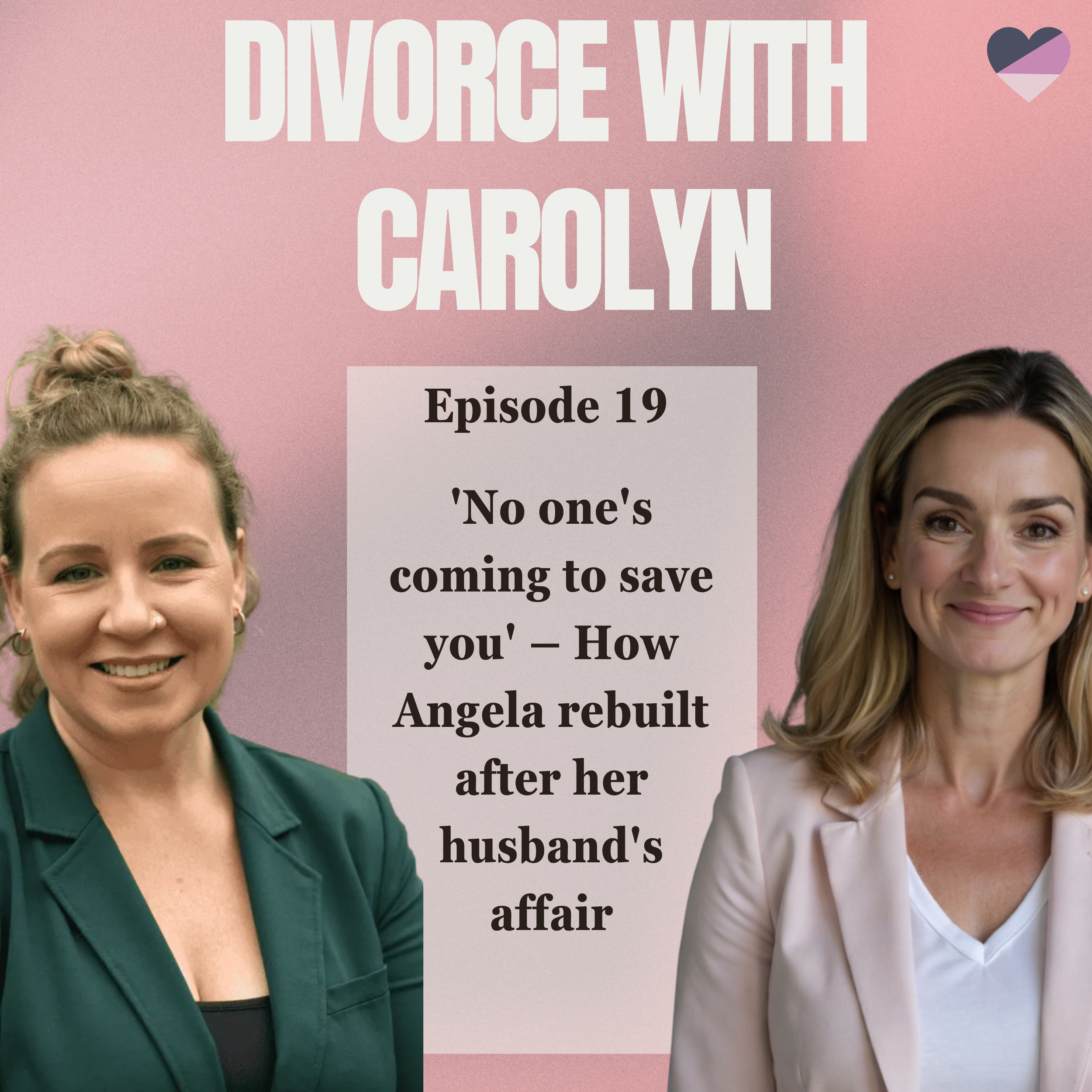
Angela Crawford separated in 2022. She was the primary carer for her two boys, had been working part-time, and was carrying the full mental and emotional load of a marriage that had been quietly failing for some time. When her husband ended the relationship following infidelity, she was left figuring out how to make ends meet on very little income.
She kept the family home – "fought tooth and nail" for it, as she puts it. And then she built a career from scratch, launched a business, and is now a buyer's agent helping other women do exactly what she had to do on her own.
"No one's coming to save you. Literally no one is gonna come and dig you out of this. If you're not gonna dig yourself out of it, well, no one else is coming along with a shovel."
That's not harsh – it's honest. And it's the kind of honest that actually helps.
What does a buyer's agent actually do?
This is the question I get asked all the time, and it matters enormously for anyone buying property after separation.
A buyer's agent works exclusively for you – the person buying the property. They search, assess, negotiate, and advocate on your behalf. Their fee comes from you.
A seller's agent (the one with the sign out the front) is paid by the seller. They are not working in your interest. They are working against it.
Angela puts it plainly: "If you haven't hired someone and they're not working for you, they're working against you. That's the start, the middle, and the end."
The common objection is cost – that a buyer's agent is an added expense you can't afford. But Angela's point is this: the seller's agent isn't free. They're paid by the seller to get the best price for the seller. Their interests and yours are directly opposed. Understanding that changes everything about how you approach buying property.
What to focus on if you're not ready to buy yet
Many women I speak to know they want to buy eventually, but aren't sure where to start. Angela's answer is always the same: know your numbers.
"A woman who knows her numbers controls her future."
In practical terms, that means:
Get clear on your debts. A credit card limit of $5,000–$10,000 – even if you never carry a balance – can reduce your borrowing capacity by $50,000–$70,000. Many women don't know this. If you have a credit card you don't use, consider whether it's worth closing.
Understand the interest rate gap. If you have a car loan at around 12% and savings sitting in a bank account earning 1%, you are effectively paying 11% interest on the loan amount for no reason. Paying down that loan first could be the single biggest thing you do for your financial position.
Talk to a mortgage broker. A good broker will look at your whole financial picture – debts, income, serviceability – and tell you where you stand and what to work on. This conversation is often free, and it tells you things Google can't.
Know what Centrelink payments you're entitled to. Angela spent time after separation researching everything available to her – single mother payments, Family Tax Benefit, all of it. If you're not sure what you're entitled to, it's worth finding out.
The stepping stone mindset
One of the things women I work with struggle with most is letting go of the home they had before. Maybe it was a four-bedroom house with a yard. Maybe it was in a suburb they loved. And now the options look smaller, and that feels like failure.
Angela's advice is straightforward: it's not failure. It's a first step.
"It doesn't have to be perfect right now. It just has to fit right now."
Buy what you can afford. Build some equity. Pay the mortgage down. In a couple of years, that stepping stone becomes your deposit for something bigger. You're not starting from scratch – you're starting from here.
She also makes the point that two kids sharing a room for a year or two isn't a trauma. "In two years they're not gonna remember. They're gonna be like, wow, Mum got us a new house and we get our own rooms."
What holds women back – and what actually helps
Two things come up in Angela's work with women again and again: not knowing the numbers, and staying loyal to advisers who aren't serving them well.
"Women are still very loyal to their banks or their accountant that they've been with for 10 or 20 years. They might be doing a poor job – but they feel bad about leaving."
There is no loyalty owed to an accountant who isn't working for you, a bank that isn't giving you the best rate, or a financial adviser who hasn't reviewed your situation since before your life changed completely. Shop around. Ask the questions you think are dumb — because they're almost never dumb.
"There's no such thing as a dumb question except the one you don't ask."
I'd also add: take the word "just" out of your emails and messages. Angela mentioned this during our conversation and it's something I keep thinking about. "I'm just checking in." "Just wondering if..." Women use "just" to soften themselves constantly – in writing, in conversation, in how they show up professionally. It makes you smaller than you are. Drop it.
One more thing – your mental health comes first
Before the property search, before the numbers, before any of it – Angela's advice is to get mental health support in place.
"Get some help. Mental health, GP plan. If you can't afford it, that is the most important thing. Because if you're in a really bad place mentally, everything else is going to be pretty bad."
She went to a psychologist every week for nearly two years. She's open about her anxiety and depression, and about being on medication – because talking about it removes the shame, and shame is what the other party uses against you.
"If I'm ashamed of it, it's going to be used against me. But if I can talk about it as far as I'm comfortable to talk about it – that's a win."
If you'd like to work with Angela Crawford, you can find her at Oasis Buyers Agent. She works with women navigating property decisions after separation and offers discovery calls to work out whether it's the right fit.
Want to hear the full conversation? Listen to this episode of Divorce With Carolyn at https://www.womensdivorceacademy.com/podcast
Frequently Asked Questions
Can I buy a house during the divorce process?
It depends on where you are in your settlement. Angela has turned down clients who weren't yet financially separated – because buying property before your settlement is finalised can complicate the asset pool and work against you. Get legal and financial advice before making any property decisions while your settlement is still ongoing.
What's the difference between a buyer's agent and a seller's agent?
A buyer's agent works for you and is paid by you. A seller's agent is paid by the seller – their job is to get the best price for the vendor, not for you. If you're purchasing property without a buyer's agent, you're negotiating against someone whose interests are directly opposed to yours.
What if I can't afford a buyer's agent?
Talk to a mortgage broker first to understand your position. A broker can often refer you to buyer's agents who suit your budget, or help you understand what you'd need to get into a position to buy. Angela's point is that the cost of not having the right advocate can be higher than the cost of hiring one.
How do I improve my borrowing capacity after separation?
Start with your debts. Reduce or close credit cards you don't use – even an unused limit reduces what a bank will lend you. Pay down car loans or personal loans if you have savings that are earning less interest than the loan is costing you. Then talk to a broker who can look at your full picture and tell you what's realistic.
What if I'm scared I'll never be able to buy again?
That fear is common, and it's understandable – especially if you've gone from a two-income household to one. But it's worth having the conversation with a broker before assuming the worst. Angela has worked with women who were convinced buying was impossible, only to find out they were closer than they thought.